


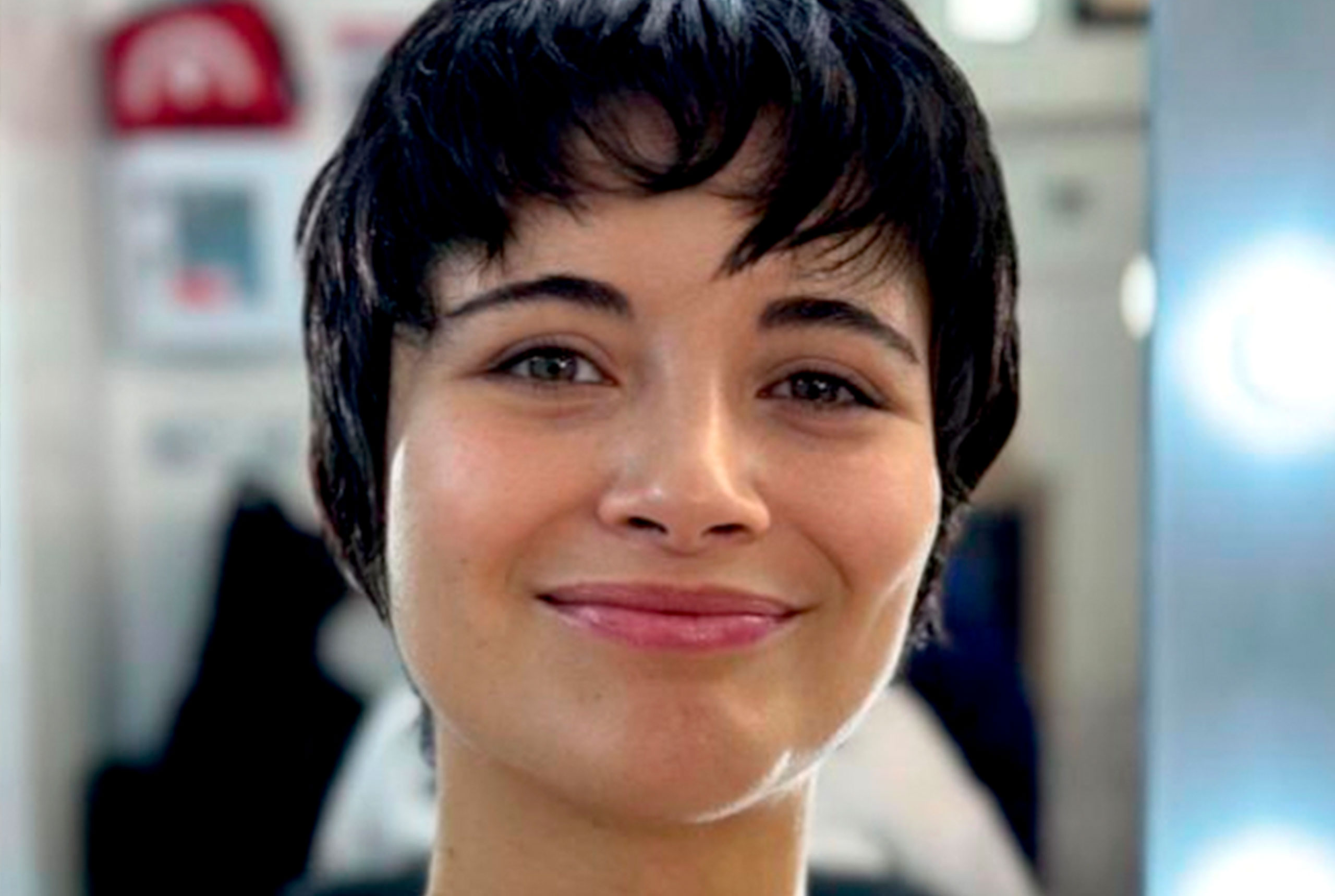
Team: Diana Lucía Buitrago Torres
Meet Diana, a PhD researcher with Araújo Lab at the MNCN-CSIC.
What specific research projects have you been involved with in the past, and what role did you play?
I have worked on projects related to vertebrate conservation from both ecological and evolutionary perspectives, mainly focusing on Neotropical species. My research began with mammals, through studies on primate behavior and conservation genetics of wild felids, and later expanded to spatial ecology, including satellite imagery applied to land cover and land use change in Africa and Latin America. While many of these projects were developed as a student or collaborator, in recent years I have also supervised undergraduate research, applying integrative approaches that combine ecological and evolutionary perspectives, often through phylogenetic measures across different spatial scales, and broadening the taxonomic scope to other vertebrates such as birds and reptiles.
What are your primary research interests, and how did you become interested in these areas?
I am especially interested in applied science for conservation, using integrative approaches that connect data-driven research with real-world challenges. My interest in this field started at an early age, inspired by the pioneering work of Jane Goodall, Dian Fossey, and Biruté Galdikas, whose dedication to understanding and protecting great apes shaped my early fascination with wildlife. Over time, this fascination expanded to large mammals more broadly, leading me to work with the closest equivalents I could find in Latin America, my region of origin, and it has continued to inspire my work ever since.
What will you be working on in our research group, and what are your goals for this project?
My PhD will focus on developing methods to make species risk assessments more responsive to rapid environmental change. Instead of relying solely on past data, I aim to incorporate emerging threats, such as climate shifts, habitat conversion, and invasive species, so that species at risk can be identified before they are formally recognized as threatened. My goal is to combine strong ecological understanding with quantitative tools to help conservation planners take earlier and more effective action.
How does your current research align with the overall objectives of our research group?
My previous work has focused on integrating aspects often treated separately, such as species’ evolutionary history and their conservation status. This integrative perspective has allowed me to explore connections between different dimensions of biodiversity and multiple sources of threat, an approach central to my doctoral project. This aligns closely with the group’s efforts to understand the mechanisms shaping biodiversity patterns across time and space and to apply that knowledge to predict species and ecosystem responses to climate change. Joining the group will allow me to build on my experience managing large, complex datasets, learn from the team’s expertise in developing forward-looking conservation tools, and contribute to strategies that anticipate biodiversity risks and support effective conservation planning.
Are there any particular challenges you anticipate facing in your current research? How do you plan to address them?
A key challenge will be integrating information from multiple sources, including climate projections, traits, and species records, each with different scales and levels of uncertainty. To address this, I plan to establish clear protocols for data standardization and refine my skills in statistical modelling and programming to handle large, complex datasets. Another challenge will be ensuring that the outputs remain useful for conservation agencies, so I intend to maintain continuous dialogue with practitioners and policy experts to ensure that the methods remain both practical and applicable.
What skills or knowledge are you hoping to develop during your time in this research group?
During my PhD, I hope to strengthen my expertise in predictive modelling and conservation assessment frameworks that account for global change. My goal is to learn how to integrate ecological, evolutionary, and climatic information into quantitative models that can anticipate extinction risks. I am also eager to deepen my understanding of how to translate research outputs into practical conservation tools, such as classification schemes or prioritization protocols applicable to management and policy contexts. Beyond technical growth, I aim to refine my scientific writing and project management skills, and to learn from the group’s collaborative and interdisciplinary environment. Working alongside researchers with diverse backgrounds will be key to developing a holistic and solution-oriented perspective on biodiversity conservation.
Where do you see your research taking you in the next five years?
In the next five years, I envision contributing to or leading data-driven projects that support applied conservation planning, whether in academia, public institutions, NGOs, or the private sector. I also hope to secure postdoctoral funding that enables me to continue working at the interface between biodiversity science and conservation policy, while expanding my research to taxa and ecosystems where predictive conservation tools remain underdeveloped, such as in some tropical regions. Ultimately, I aim to foster collaborations that bridge global modelling efforts with local conservation priorities.
Are there any particular conferences, journals, or professional networks you are keen to engage with through your research here?
I am interested in engaging with international scientific societies and commissions related to ecology, mammalogy, and conservation, including those under the International Union for Conservation of Nature (IUCN). These platforms offer meaningful opportunities to exchange ideas, build collaborations, and bridge research with conservation practice. In particular, I would like to contribute to global initiatives that connect science, policy, and open data, such as the Intergovernmental Science-Policy Platform on Biodiversity and Ecosystem Services (IPBES) and the Global Biodiversity Information Facility (GBIF). More broadly, I am eager to engage with any scientific or professional community where I can share knowledge, learn from others, expand my horizons, and contribute collaboratively to advancing biodiversity conservation.
What do you think are the most pressing questions or challenges in your research field today?
One of the main challenges in biodiversity conservation today is how to move from reactive to anticipatory approaches, those capable of identifying species and ecosystems at risk before declines become irreversible. Although major advances have been made in integrating multiple areas of knowledge into conservation frameworks, we still struggle to translate these complex datasets into operational tools for decision-making. Another pressing issue is the uneven distribution of data and research capacity across regions, which limits our understanding of biodiversity in the most diverse and often most threatened areas of the planet. Overcoming these challenges will require both methodological innovation and stronger bridges between data-driven research and real-world conservation practice.
How do you stay updated with the latest developments and research in your area of interest?
I try to stay up to date by following the academic profiles of researchers working in my areas of interest through platforms like ResearchGate. I also keep active alerts on Scopus and Google Scholar, but most of the time I search directly by keywords in these databases to find the most relevant and, when needed, the most recent work related to my topics of interest or to the projects I am conducting. I usually perform a screening process by reading titles and abstracts until I end up with those that warrant a full read.
Can you recommend any groundbreaking or influential papers/books in your field that you think everyone should read?
Among books, Gorillas in the Mist by Dian Fossey remains one of my all-time inspirations, as its combination of field passion and scientific rigor reminds us of the human dimension behind conservation. The Sixth Extinction by Elizabeth Kolbert is, in my opinion, a masterpiece of scientific communication, blending storytelling and evidence in an exceptional way. Bones, Clones, and Biomes, a book on the evolution of Neotropical mammals written by a group of leading scientists in the field, became one of the foundational texts for my first master’s degree, and to this day I still consider it an outstanding reference. As for scientific papers, there are so many excellent ones that it’s hard to choose just a few, but I’m particularly drawn to review papers and those that propose new methods or frameworks while applying them directly to case studies with vertebrates, covering diverse areas but always aimed at advancing conservation objectives.
Outside of research, what are your hobbies or interests?
I really enjoy staying active and connected with the world around me. Martial arts have been a big part of my life as they keep me grounded, focused, and disciplined. I also love swimming, dancing, taking long walks, and occasionally biking or running. On quieter days, I like reading, cooking new recipes, or doing small crafts. Spending time with animals is something that deeply relaxes me; there’s a kind of peace and honesty in their company that I find restorative.
How do you balance your research commitments with your personal life?
Over time, I’ve learned that maintaining a healthy separation between work and personal life isn’t just desirable, it’s essential. Productivity, in my view, depends largely on how rested and centered the mind is. I try to keep good sleep habits, minimize multitasking, and focus deeply when I work. Research can be incredibly absorbing, but I’ve realized that balance is more about awareness, listening to your body, and knowing when to stop. Having lived and studied in different countries, I’ve also learned the importance of being adaptable. Some periods are more demanding than others, and I think balance often comes from allowing flexibility and self-compassion.
Are there any non-research activities or groups within our institution or community that you’re interested in joining?
During my time at the MNCN, I’d love to join groups related to trekking, cultural exchange, or volunteering, especially those involving animals or environmental initiatives. I’m also very interested in science communication and outreach projects that connect research with society. Beyond science, I’m drawn to activities that foster creativity, empathy, and a deeper connection with nature and people, such as art, outdoor experiences, or community engagement programs.